If you are comparing “refinishing bathtubs cost,” “cost to refinish a bathtub,” or “bathtub refinishing near me cost,” this guide explains the real numbers for Fresno in 2026 and the reasons prices change. You will see a clear average range for standard tubs, plus how material, damage, size, access, and finish options shift your quote up or down. We will also cover the cost to resurface a cast iron tub, how tub-and-tile packages are priced, what a written estimate should include, and easy ways to lower your tub resurfacing cost without cutting quality. By the end, you will know how to compare bids fairly and book professional bathtub refinishing that fits your timeline and budget.
What is the average cost to refinish a bathtub in Fresno in 2026?
In Fresno, the average cost to refinish a standard bathtub typically falls between about $400 and $900, with many projects landing near the middle of that range when the tub is complete and damage is light. Your final price depends on material (porcelain, acrylic, fiberglass, or cast iron), the time required for repairs, access to the bathroom, and any add‑ons such as re‑caulking, color change, or anti‑slip texture. Entry‑level quotes sometimes look attractive, but they may skip important steps like structural repair or primer, which shortens the life of the finish and costs more to redo later. The best comparison is an itemized estimate that shows prep, repairs, primers, topcoat, ventilation, cure time, and warranty so you can judge total value not a single headline number.
Which factors change the cost to refinish a bathtub?
Price changes come down to time, materials, and risk, so anything that increases labor, coatings, or difficulty affects your quote. Material matters because porcelain and cast iron need stronger mechanical prep, while fiberglass may need structural fixes for soft floors or flex. Damage adds time for chip filling, rust removal, or crack reinforcement, and size increases coating use on soaking or oversized tubs. Color changes and anti‑slip textures add passes and material, while tricky access stairs, tight turns, or limited parking slows the job. Add‑ons like drain hardware, re‑caulking, or addressing mildew behind old caulk also shift cost. Ask each company to list these factors in writing so you can compare “apples to apples” between bathtub refinishing companies near you.
How does tub material affect price compared with the average?
Tub material shapes the prep and coating plan, which changes cost. Porcelain and cast iron tubs are durable but need heavier sanding or etching for adhesion and precise chip repair so that patches do not “print” through the topcoat, which adds time. Acrylic and fiberglass tubs refinish well but can hide flex or soft spots; if the floor moves, a pro may reinforce the underside or inject support foam before coating. Those structural steps add labor yet protect the new finish from early cracking. Because material dictates the repair system, two tubs that look similar can have different prices. A good estimate will state your tub type and the exact repairs included so your quote and warranty match your situation.
How do damage and prep time impact your quote?
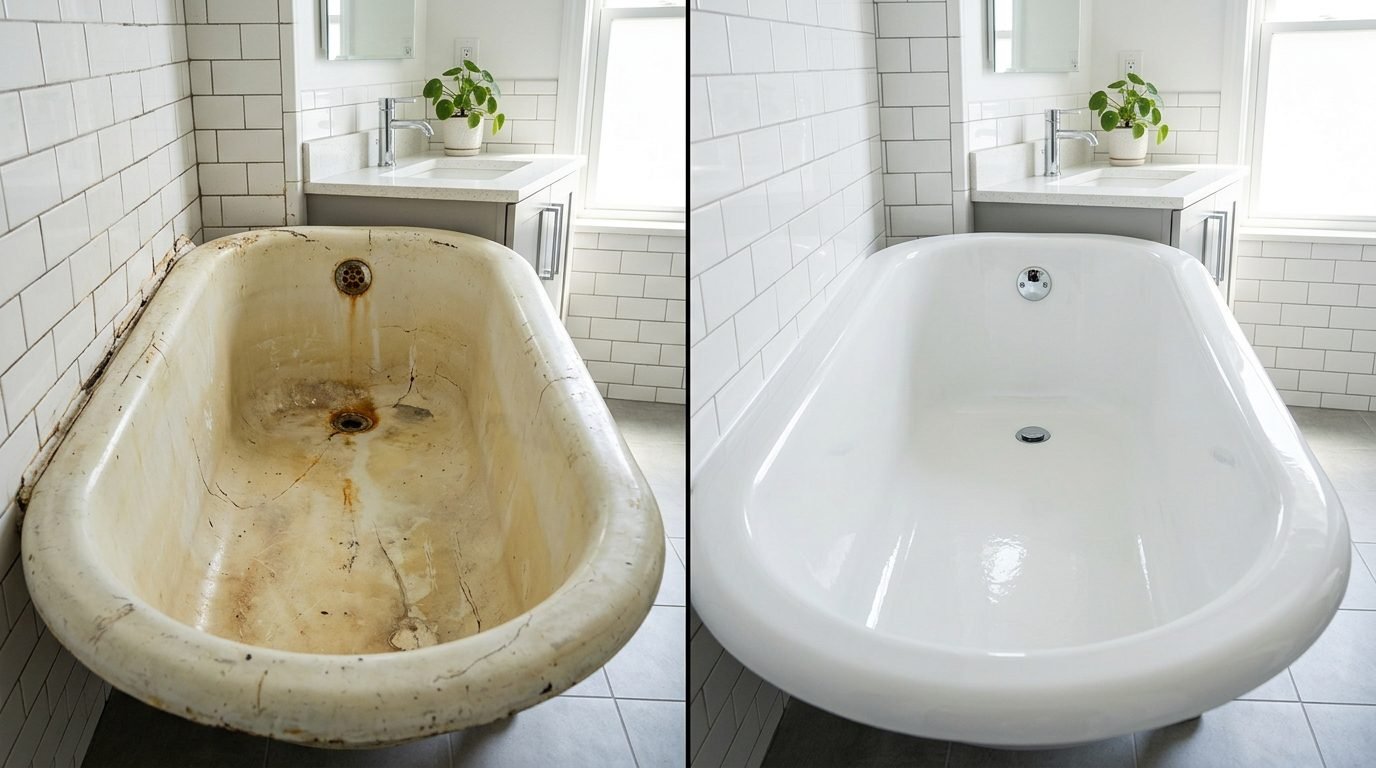
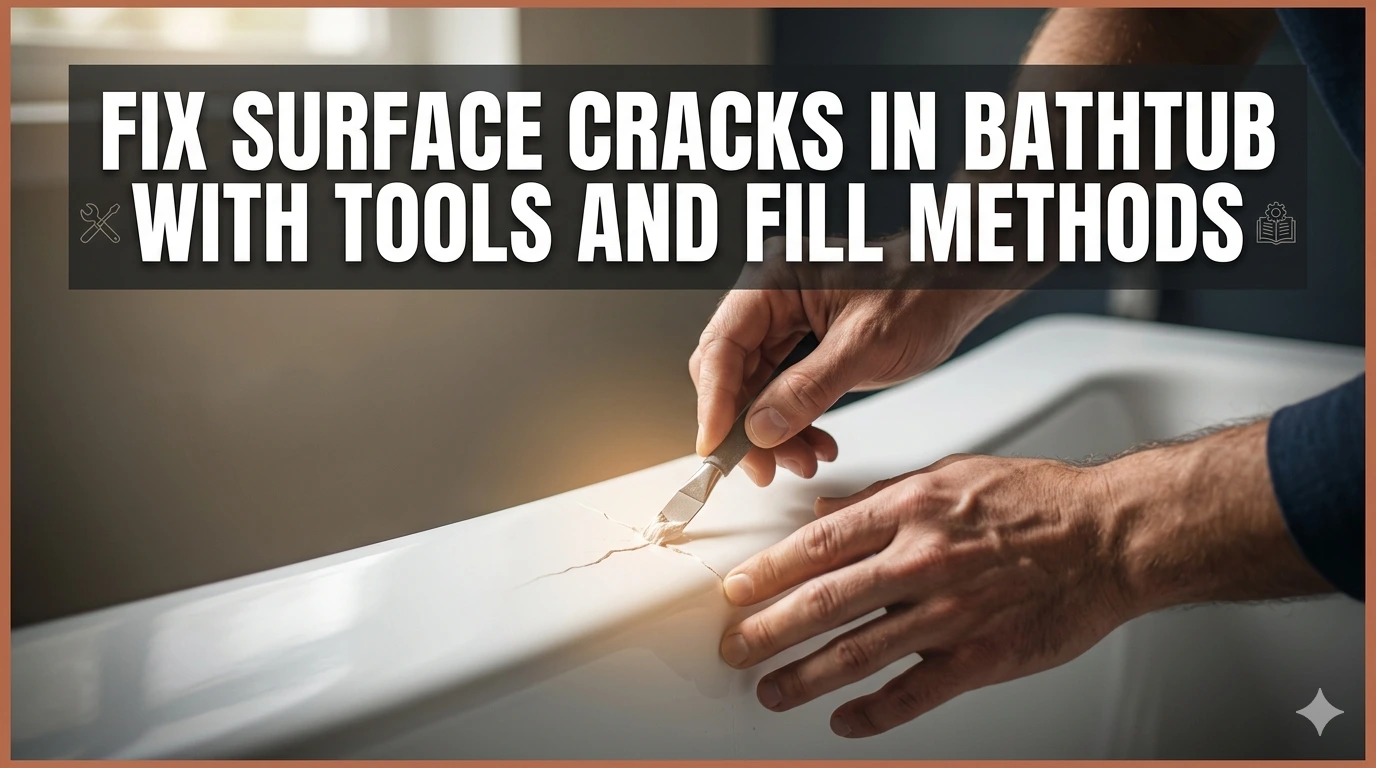
Damage drives labor, and labor drives price, so honest descriptions produce stable quotes. Chips and deep scratches require filling and leveling; hairline cracks are opened slightly and reinforced with resin; rust around the drain or overflow needs removal and sealing; and soft floors in fiberglass must be supported before coating. Each step adds minutes that add up to hours, which is why a “cheap” quote sometimes skips repairs and relies on thick topcoat to hide flaws. That approach looks fine at first but fails early. When you see a higher quote that includes structural repair, primer, and cure time, you are paying for work that keeps your finish glossy and sealed for years.
Do color changes and add‑ons raise the price?
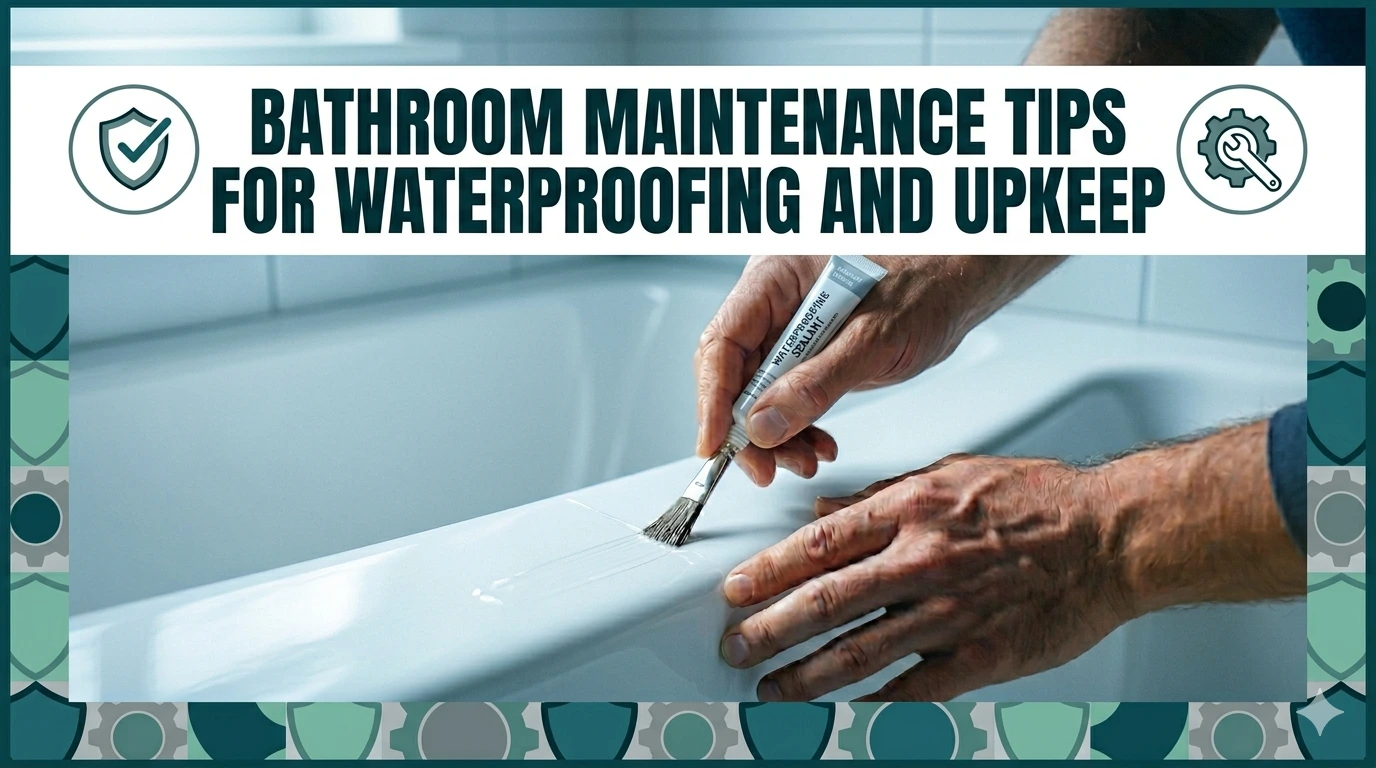
Color changes often raise the price because they add coats and careful masking to achieve even coverage, and custom colors may require special mixing. Popular add‑ons like pro anti‑slip texture, fresh silicone caulk, or new trim rings around drains and overflows also add time and materials but they make the job feel complete and safer underfoot. If you keep a standard white and skip hardware swaps, you can often stay closer to the middle of the range. When you compare quotes, ask whether the bid includes re‑caulking, masking details, and any anti‑slip option you want so the final number matches what you expect to see on the finished tub.
What is the cost to refinish a cast iron bathtub in Fresno?
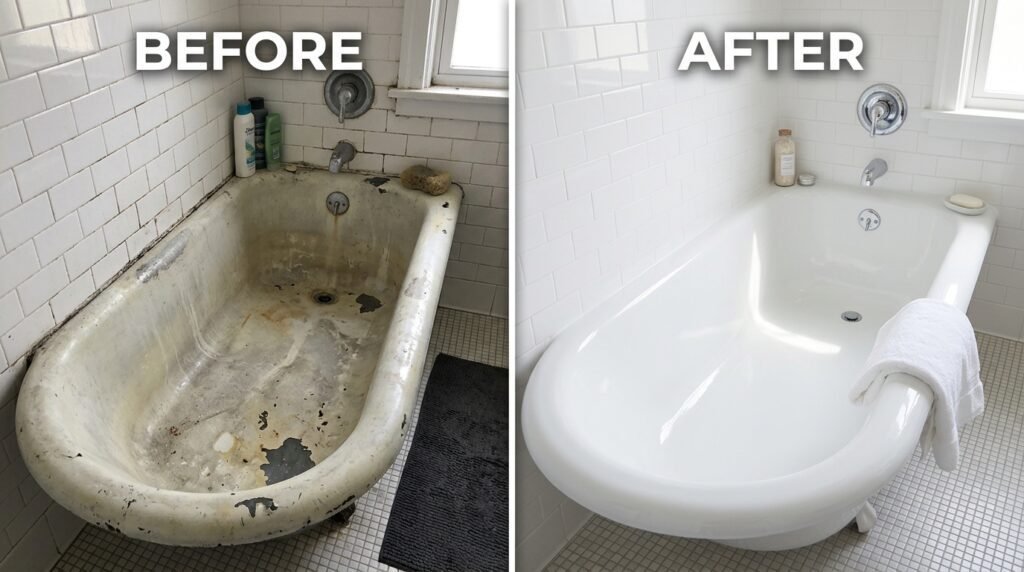
The cost to refinish a cast iron bathtub is usually on the higher end of the local range because cast iron tubs are heavy, dense, and coated with hard porcelain that needs aggressive mechanical prep for long‑term adhesion. In Fresno, many cast iron projects land around $600 to $1,000 depending on size, chip and rust repair, and access to the bathroom. If the tub has period features or unique curves, masking detail and coating control also add time. While this is more than a basic acrylic refresh, it is still far less than demolition and replacement, which can run into several thousand dollars once tile, plumbing, haul‑away, and finish work are added to the bill.
How much does it cost to resurface a tub and tile together?
Tub‑and‑tile packages vary because tile conditions vary, but many Fresno projects fall between roughly $1,000 and $2,500, depending on square footage, grout cleaning or repair, polishing vs. reglazing, color change, masking complexity, and bathroom ventilation. Cleaning and polishing are the lower‑cost path when tile is sound and needs only stain or hard‑water removal, while full tile reglazing is priced higher due to prep, primer, and coating across many square feet. If you are comparing bathroom resurfacing costs for tub, tile, and surrounds, ask each company to break out the tub price from the wall price and list any grout, caulk, or repair work so you can choose the exact scope that fits your budget.
Is DIY cheaper than hiring professional bathtub refinishers near me?
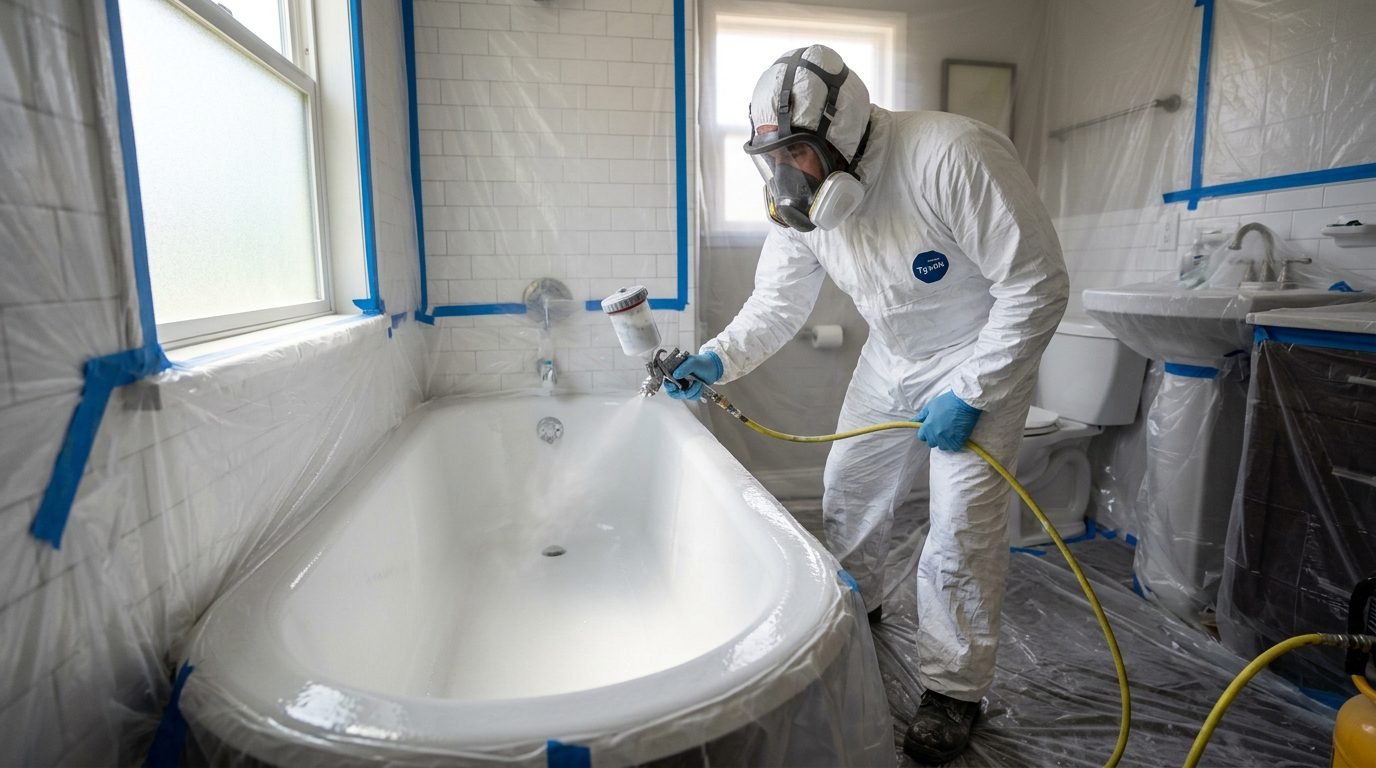
DIY kits cost less at checkout, but they rarely cost less over the life of the finish, and they often create extra expense when a pro must strip and redo failed coatings. Kits struggle with adhesion on porcelain and cast iron without commercial etching, and they cannot fix movement in fiberglass floors. Brush or roll marks, dust nibs, and early peeling are common, which means you live with a rough surface or pay to remove it later. Professional bathtub refinishing includes material‑matched primers, spray equipment, ventilation, and structural fixes that make the topcoat last. If you need a short‑term fix for a rental turnover, a kit can be tempting, but for owner‑occupied homes and your time pro work is the better value.
What should an itemized estimate include to avoid hidden fees?
A clean, professional quote should state the tub material, list the repairs included, and specify the coating system adhesion promoter, primer, and topcoat plus masking and ventilation. It should also clarify add‑ons like re‑caulking, anti‑slip texture, drain trim, or color change, and it should confirm whether parking, stairs, or tight access adds time. Cure time and first‑week care instructions belong on the estimate or job sheet as well as a written warranty that explains what is covered and what voids coverage. When two bids differ, the cheaper one often skips structural repair, primer, or re‑caulking; when you adjust the scope to match, prices usually converge. Itemization turns “cheap vs. expensive” into a fair, informed choice.
How can you reduce your tub resurfacing cost without cutting quality?
You can lower cost and speed the job by preparing well and choosing options that focus on durability over extras. Send two or three clear photos of the tub and any damage so your quote is accurate the first time, and list access limits like stairs or tight doors so the right crew and gear arrive. Clear counters and floors, and move shower items out to save masking time. Choose a standard white if you can, skip hardware swaps that require plumbing time, and ask about scheduling flexibility or multi‑room or multi‑unit discounts if you manage rentals. Finally, fix slow leaks before the appointment; water dripping during cure can ruin a perfect finish and force a costly return visit.
How long does refinishing take, and when can you use the tub?
Most single‑tub jobs take about half a day on site for cleaning, repairs, masking, ventilation setup, primer, and topcoat application, followed by a cure window before use. Many systems allow light use after about 24 hours in normal Central Valley conditions, while thicker builds or cooler rooms may need 36–48 hours; your refinisher will set the exact schedule. Build in a little margin for the first shower, avoid placing bottles on ledges during the first week, and skip suction‑cup bath mats entirely. Cure time protects gloss and hardness; rushing use too soon is one of the fastest ways to dull a great finish and shorten its lifespan.
When is tub replacement cheaper than refinishing?
Replacement can be the better call when the tub is cracked beyond safe repair, the bathroom layout must change, or old plumbing and subfloors need major work anyway. Once you add demolition, disposal, a new tub, tile or surround work, plumbing labor, and finish carpentry or paint, full replacement often costs several times more than refinishing. That said, if you already plan a full remodel with walls open and fixtures moved, the incremental cost of a new tub may make sense. A quick rule of thumb: if the shell is sound and the issue is wear, staining, or dated color, refinishing wins; if structure or layout drives the project, replacement may be the right path.
How do you pick the best value among bathtub refinishing companies near me?
Start with proof: local reviews that mention fair pricing and on‑time work, a photo gallery with before‑and‑after shots, and clear license and insurance. Ask each company the same questions what repairs are included, what coating system they use, whether primer is standard, and if re‑caulking and anti‑slip are options. Request a written, itemized estimate that confirms ventilation, cure time, and warranty terms, and ask what would cause a price change at the door so there are no surprises. Compare at least two bids with the same scope; the best partner is the one that explains the process in plain language, honors their quote, and leaves you with a durable finish that is easy to clean.
Frequently Asked Questions (FAQ)
What is the average cost to refinish a bathtub in Fresno?
Most standard tubs in Fresno range about $400–$900 depending on material, repairs, access, and options like color change or anti‑slip. Quotes outside that range usually involve special conditions such as cast iron with rust repair, jetted tubs, or bundled wall tile work. Always compare itemized bids so you know what each price includes.
What is the cost to refinish a cast iron bathtub?
Cast iron projects tend to sit on the higher end because they need heavier prep and detailed chip and rust repair, with many Fresno jobs running roughly $600–$1,000. Even at that price, refinishing cast iron is still far less than the combined cost of demolition, haul‑away, tile work, plumbing, and a new tub.
How much does it cost to have a tub refinished if it has chips or cracks?
Minor chips add modest labor, while multiple chips, rust at the drain, or hairline cracks increase time and price. Expect a standard job to creep upward when structural repair is needed, especially on fiberglass floors that flex. Good companies explain repair steps and show how they protect the new finish and your warranty.
What is the cost to resurface a tub and tile at the same time?
Tub‑and‑tile packages in Fresno often range from about $1,000 to $2,500 based on tile condition, square footage, and whether walls are cleaned and polished or fully reglazed. Ask for a breakout that lists tub price, tile price, grout or caulk work, masking, and color changes so you can tune the scope to your budget.
Is DIY cheaper than hiring professional bathtub refinishers near me?
Kits are cheaper upfront but often cost more in the long run because they struggle with adhesion, leave brush or roll marks, and wear out quickly. If a pro has to strip a failed kit, you pay twice. Professional refinishing includes proper prep, primers, spray equipment, and ventilation, which yields a longer‑lasting, easy‑to‑clean surface.
How can I lower my tub resurfacing cost without cutting corners?
Send clear photos for accurate quoting, choose a standard white color, clear the bathroom to save masking time, and fix drips before the appointment. Ask about multi‑room or multi‑unit pricing if you manage rentals, and be flexible on scheduling if possible. Most savings come from smooth logistics and a scope that focuses on durability.